
Winter is an exciting time to be on the water in Maui. Humpback whales return to Hawaiian waters by the thousands, and on the right day, you can spend the morning snorkeling clear water and still spot whales from shore or while you’re out on a boat.
If you want both experiences to be part of your trip, January through March is generally the best time for Maui whale watching and snorkeling. These months fall right in the heart of humpback whale season, while snorkeling is still very much on the table.
Winter does bring bigger swells and changing ocean conditions, so where you snorkel matters. But with a little flexibility, there’s no reason you have to choose between coming to Maui for the whales and coming for what’s beneath the surface.
Table of Contents
- When Is Whale Season in Maui?
- Maui Whale Season Month by Month
- Can You Still Snorkel in Maui During Whale Season?
- What’s the Best Month for Both Whale Watching and Snorkeling?
- Where Should You Snorkel in Maui During Winter?
- Is Morning Better for Snorkeling in Maui?
- Can You See Whales While Snorkeling in Maui?
- Can You See Whales From Shore in Maui?
- Do You Need to Take a Whale Watching Tour?
- Planning a Maui Trip Around Both Whales and Snorkeling
- Frequently Asked Questions
When Is Whale Season in Maui?
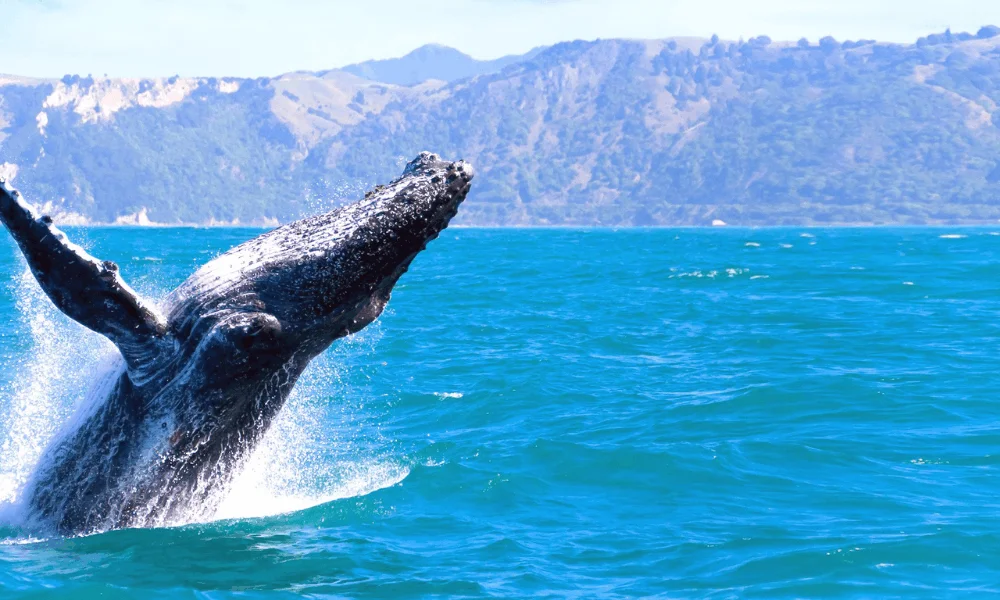
Every year, North Pacific humpback whales make the long migration from their northern feeding grounds to the warmer waters around Hawaiʻi. This is where they mate, give birth, and nurse their calves before eventually heading north again.
The Hawaiian Islands Humpback Whale National Marine Sanctuary says humpbacks are generally seen in Hawaiʻi from November through April, with peak whale season running from January through March.
Those dates are better thought of as a general season than a firm beginning and end. Whales begin arriving in the fall, their numbers build through winter, and they gradually depart in the spring. The exact timing varies from year to year.
If seeing humpbacks is one of the main reasons you’re coming to Maui, the middle of the season gives you a much better window than trying to catch the first arrivals in November or the last whales of spring.
Maui Whale Season Month by Month
If you’re deciding when to book your trip, here’s a general idea of how the season progresses:
| 2-Hour Molokini Tour | 5-Hour Molokini & South Maui Tour | |
|---|---|---|
| Best for | Travelers short on time or looking for a focused Molokini snorkel | Travelers wanting a fuller morning on the water with multiple stops |
| Snorkel stops | Molokini Crater | Molokini Crater, Molokini back wall (when conditions allow), plus an additional South Maui coastal stop |
| Pace | Direct and efficient | More relaxed, with more time to explore |
| Snorkel time | Focused time at Molokini | Extended time across multiple locations |
| Food & drink | Lighter refreshers | More complete food and beverage service |
| Departure timing | Great option if you have afternoon plans | Takes up most of the morning |
There isn’t a single date when Maui suddenly becomes a whale-watching destination. If whales are a must-see, January through March gives you the strongest window. If seeing one would simply be a very cool addition to the trip, December and April give you more flexibility.
Can You Still Snorkel in Maui During Whale Season?
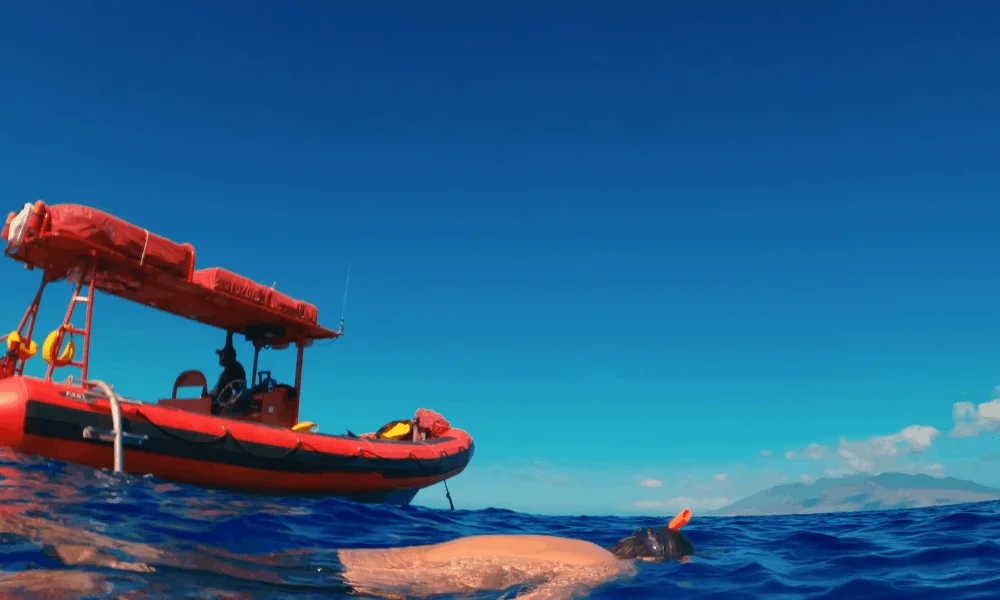
Absolutely. Maui snorkeling doesn’t stop when the whales arrive. You just need to pay a little more attention to where and when you get in the water.
Winter brings more frequent north and northwest swells, which can make beaches that are great for snorkeling at other times of year rough on a particular day. Honolua Bay is a good example. It’s known for extensive coral and marine life, but Hawaiʻi’s Division of Aquatic Resources specifically advises avoiding the area when winter surf is high.
That doesn’t mean rough conditions in one area rule out snorkeling across the island. Maui’s coastline faces different directions, and conditions can vary considerably from one part of the island to another.
South Maui gives you several places to consider when conditions cooperate. Ulua Beach in Wailea is a popular shore-snorkeling spot. Farther south, ʻĀhihi-Kīnaʻu Natural Area Reserve protects a rugged stretch of volcanic coastline and marine habitat. Offshore, Molokini Crater offers another option that’s reached by boat rather than from shore.
No snorkeling spot is a guaranteed winter option. Check conditions that day, pay attention to warnings and closures, and choose a location that matches your swimming ability.
What’s the Best Month for Both Whale Watching and Snorkeling?
For most travelers trying to experience both, we’d focus on January, February, and March.
February falls right in the middle of peak whale season, making it an easy month to consider if humpbacks are a major priority. You still have plenty of snorkeling possibilities, from boat trips to Molokini to shore snorkeling around South Maui when conditions allow.
January offers a similar combination, while March keeps you within peak whale season but moves you a little closer to spring.
That doesn’t make December or April bad choices. They’re simply closer to the edges of whale season. You can absolutely see humpbacks during either month, but if you’re choosing your travel dates specifically because you want to see whales, the January-through-March window gives you more to work with.
Where Should You Snorkel in Maui During Winter?
There isn’t one beach we’d tell every visitor to snorkel all winter. The better approach is to have a few possibilities in mind and see what the ocean is doing once you’re here.
Ulua Beach
Located in Wailea, Ulua Beach is a popular option for shore snorkeling. Its easy beach access also makes it appealing if you don’t want every snorkeling experience on your vacation to involve a boat.
As with any shore snorkel, calm-looking water from the parking lot doesn’t tell you everything. Check current conditions before getting in.
ʻĀhihi-Kīnaʻu Natural Area Reserve
Farther south, ʻĀhihi-Kīnaʻu offers a very different setting, with lava coastline and protected marine habitat.
Because this is a protected natural area rather than simply another beach, take a few minutes to review the current rules and visitor information before visiting.
Molokini Crater
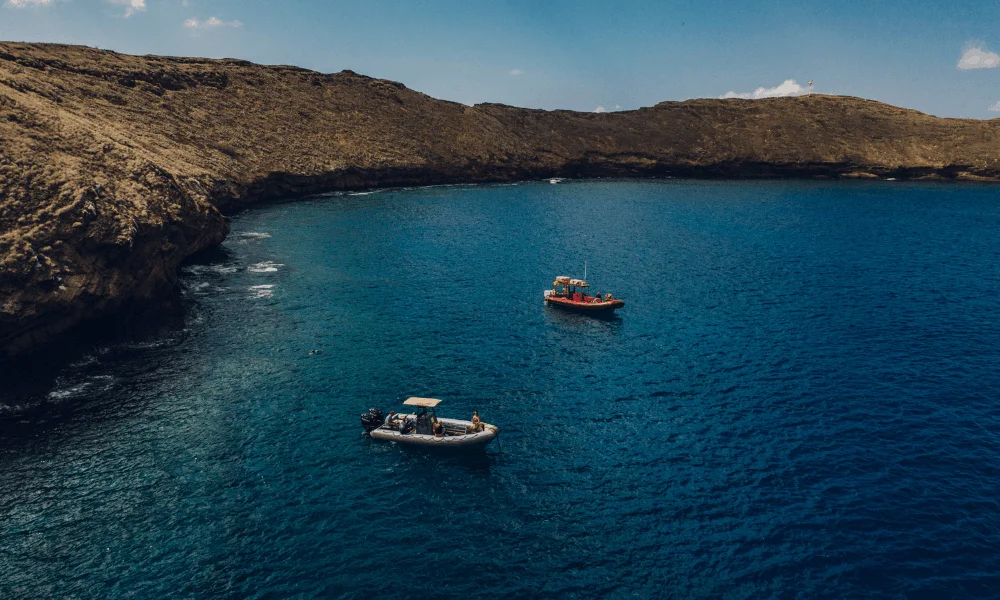
Molokini sits offshore from South Maui, so you’ll need a boat to reach it. The partially submerged volcanic crater is home to protected marine habitat and is one of Maui’s best-known snorkeling destinations.
A Molokini trip also gives you a chance to experience Maui farther offshore rather than limiting your snorkeling to beaches.
Honolua Bay
Honolua Bay in West Maui is well known for snorkeling, but winter is exactly why it’s useful to understand conditions instead of working from a list of “best snorkeling beaches.”
When the bay is calm, there’s extensive coral habitat along its rocky sides. During periods of high winter surf, however, conditions can be unsuitable for snorkeling. The Hawaiʻi Division of Aquatic Resources specifically warns visitors about winter high surf here.
If you’re planning to snorkel independently, don’t get too attached to one location before your trip. Our guide to the best snorkeling spots in Maui can give you some ideas, but the ocean should have the final say.
Is Morning Better for Snorkeling in Maui?
Often, yes. There’s a reason so many Maui snorkel boats head out early.
Winds frequently become stronger as the day progresses, so mornings can offer better boating and snorkeling conditions. An early start can also leave you with more of the day to explore Maui once you’re back on shore.
But an 8 a.m. snorkel isn’t automatically a calm snorkel. Swell, currents, visibility, wind, and local conditions all matter.
If you’re snorkeling independently, check conditions before heading out. And if snorkeling is one of the activities you’re most excited about, it helps not to build an itinerary so rigid that you can’t move it to another morning when the ocean has other plans.
Can You See Whales While Snorkeling in Maui?
You might not see one underwater, but there’s a chance you’ll hear one.
Male humpback whale songs can travel long distances through the water. During whale season, snorkelers and divers sometimes hear those distant sounds underwater even when there isn’t a whale anywhere in sight.
Actually seeing a humpback while you’re snorkeling is a very different situation. You shouldn’t intentionally swim toward or try to snorkel with humpback whales. Federal regulations require people in Hawaiian waters to remain at least 100 yards away from humpbacks.
You may also spot whales while you’re traveling by boat to a snorkeling location. During peak season, that isn’t unusual, but it’s still an incidental wildlife sighting rather than something you should expect from a snorkeling trip.
Can You See Whales From Shore in Maui?
Yes, and during peak season you don’t necessarily have to look very hard.
Start by watching for a blow on the horizon. Once you spot one, keep an eye on the same general area. You may see another blow, a whale’s back as it surfaces, a tail disappearing beneath the water, or more active behavior like a breach or tail slap.
Open coastal viewpoints can be great places to watch, and binoculars are worth bringing if you know you’ll spend some time looking from shore.
Maui even participates in an annual shore-based whale count. The Great Whale Count gathers volunteers at sites around the island to record humpback sightings during peak season.
Do You Need to Take a Whale Watching Tour?
No. During peak whale season, you can absolutely see humpbacks from shore. Watch the horizon long enough and you may spot blows, breaches, tail slaps, or whales moving along the coast.
But seeing a whale in the distance and heading out specifically to watch humpbacks are two very different experiences.
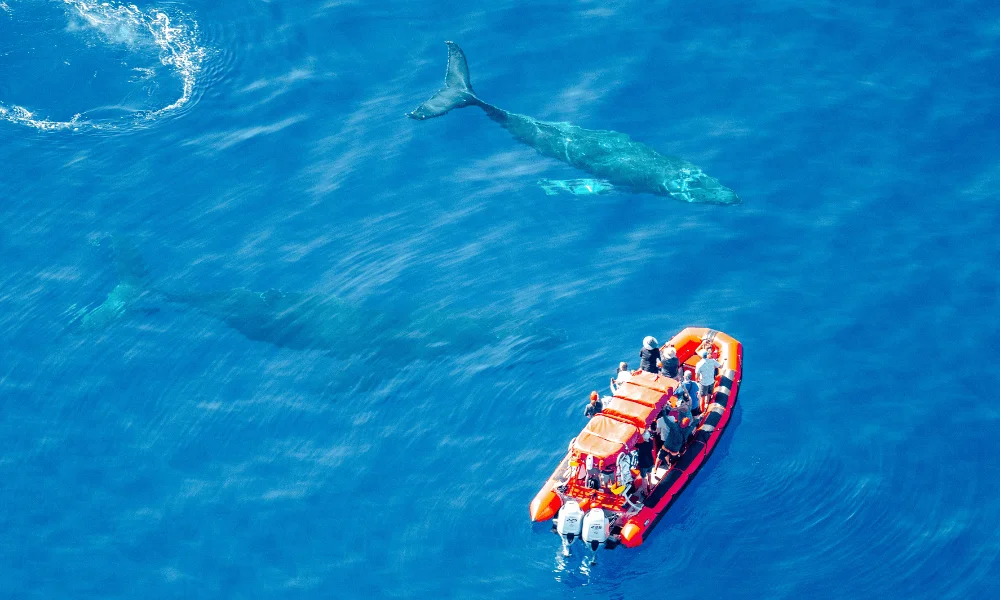
On a dedicated whale watching tour, you’re out on the water with a captain and crew actively looking for signs of whale activity. You’re not limited to whatever happens to pass in front of one stretch of coastline, and your crew can help point out behaviors that are easy to miss or misunderstand from shore. A splash in the distance becomes a competition pod, a mother traveling with her calf, or a whale preparing for a deeper dive.
There’s also something different about experiencing the scale of a humpback from the water. Boats are required to stay at least 100 yards away from humpbacks in Hawaiʻi, but even at that distance, seeing a whale surface, breach, or lift its tail from water level can be an entirely different experience than watching from land.
So no, you don’t need a whale watching tour to see whales in Maui. But if humpbacks are one of the reasons you’re visiting during winter, we’d make room for one rather than leaving the experience up to a lucky sighting from shore.
Experience Maui in Whale Season
Whale season adds something special to an already great time on the water in Maui. You might spend the morning snorkeling along a reef, hear humpback songs underwater, and spot a blow on the horizon later that afternoon.
You can’t plan exactly when wildlife will show up or what the ocean will do, but you can give yourself the opportunity to experience both. Come during peak whale season, make time for snorkeling, and stay flexible enough to enjoy Maui as conditions change.
Frequently Asked Questions About Maui Whale Season and Snorkeling
What is the best month to see whales in Maui?
January through March is generally the strongest window for seeing humpback whales in Maui, with February right in the middle of peak season.
Can you snorkel in Maui during whale season?
Yes. Snorkeling happens year-round in Maui. Winter can bring larger swells to parts of the island, so you’ll want to choose where and when you snorkel based on current ocean conditions.
Is February a good time to snorkel in Maui?
Yes. February can be a great time to snorkel in Maui when conditions cooperate. It’s also peak humpback season, which makes it an appealing month if you want both snorkeling and whale watching to be part of your vacation.
Can you see whales on the way to Molokini?
It’s possible during whale season. Humpbacks are common in Hawaiian waters during the winter, so you may spot them while traveling by boat. A Molokini snorkel trip is still primarily a snorkeling trip, however, and whale sightings aren’t guaranteed.
Can you hear whales while snorkeling in Maui?
Yes, it’s possible. Male humpback songs travel long distances underwater, and snorkelers sometimes hear them during whale season even when the whales themselves are nowhere nearby.
Can you snorkel with humpback whales in Maui?
No. You shouldn’t intentionally approach a humpback to swim or snorkel with it. Federal regulations require ocean users to remain at least 100 yards away from humpback whales in Hawaiian waters.
When does Maui whale season end?
Whale numbers generally decline through spring as humpbacks begin migrating back toward their northern feeding grounds. Most whale activity in Hawaiʻi occurs from November through April, although some humpbacks can remain into May.
Related Posts:

Inside South Maui Coast
While South Maui is one of the most popular destinations for tourists and residents, few choose to explore a little further south to the historic, scenic...
Maui Activities

15 Things To Do In Maui
Maui is the second-largest of the six main Hawaiian Islands and has some of the most diverse landscapes of any in the archipelago. From the alpine deserts...
Maui Activities

One Week on Maui
One week on Maui is simply not enough time to see and do everything. That's a fact. However, for the millions of people who visit Maui each year, many...
Maui Activities

Top 10 Things to Do in Wailea
The sandy beach is a gentle slope, so this means it is easy to get in, and out of, the ocean. If you are a certified diver, you (and your dive buddy of...
Maui Activities


Sign up to get the latest offers and information and more.


